- +355 68 364 0420
- info@avordentalclinic.com
- DURRES, ALBANIA
+355 68 364 0420
Improve the alignment of your teeth and bite with personalized orthodontic treatment in Albania designed around your dental health, facial proportions and long-term function.
At AVOR Dental Clinic in Durrës, we provide orthodontic treatment for teenagers and adults who want to correct crowded teeth, spacing, bite problems or general tooth misalignment. Depending on your individual case, treatment may involve traditional braces, aesthetic orthodontic options or clear aligner therapy.
For international patients, the first assessment can begin before travelling to Albania. Send us photographs of your teeth, panoramic X-rays and any previous orthodontic records so our team can begin understanding your case and treatment possibilities.
Orthodontics is the area of dentistry focused on improving the position of teeth and the way the upper and lower jaws meet.
Treatment gradually moves teeth into more appropriate positions using controlled forces applied through braces, aligners or other orthodontic appliances.
Orthodontics may improve both appearance and function.
Treatment can help address:
The appropriate treatment depends on the position of the teeth, jaw relationship, age, periodontal health and complexity of the case.
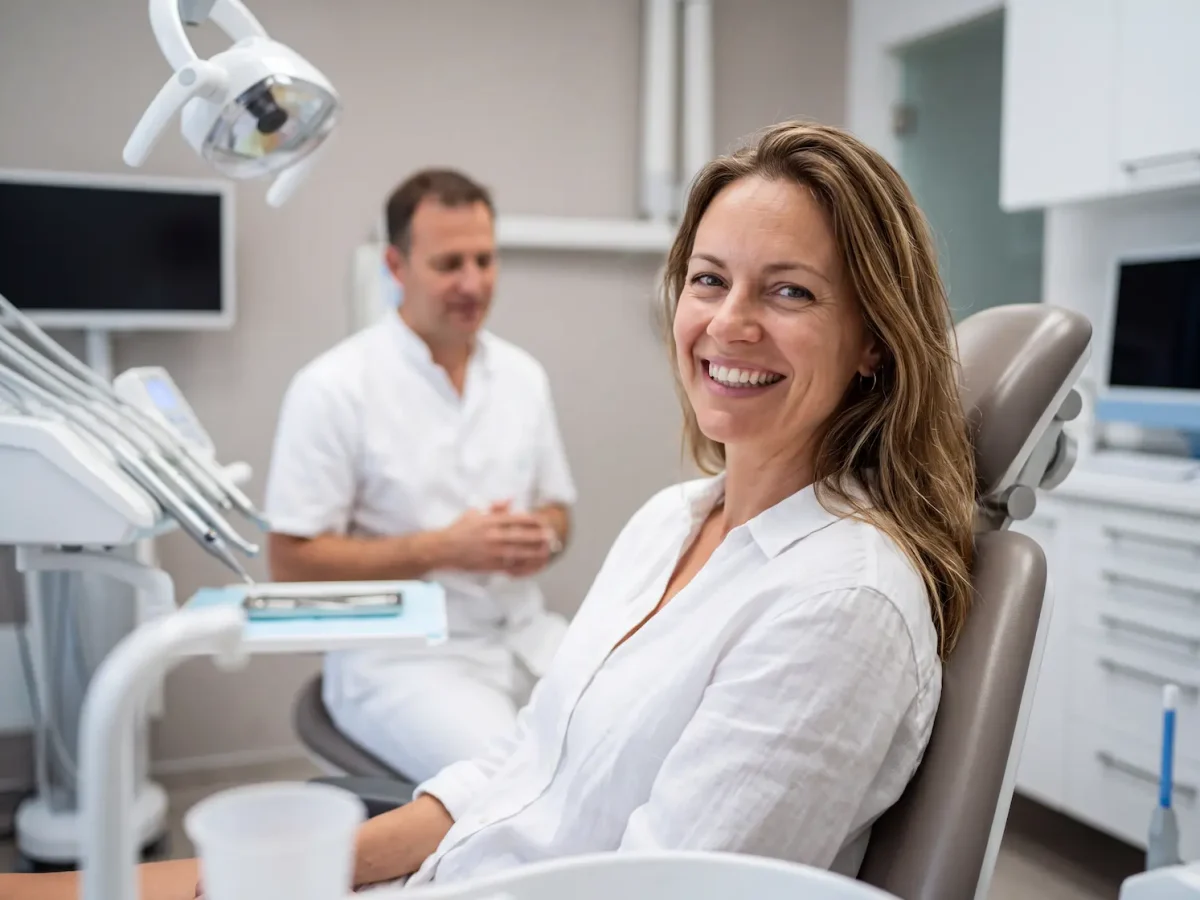
Orthodontic treatment is not limited to children or teenagers.
Many adults choose orthodontics because they want to improve their smile while preserving their natural teeth.
You may benefit from orthodontic treatment if you:
Before starting treatment, your dentist or orthodontic clinician needs to evaluate the health of your teeth, gums and supporting bone.
Active decay, gum disease or other dental problems may need to be treated before orthodontic movement begins.
Successful orthodontics involves much more than making the front teeth appear straighter.
The position of each tooth needs to work with the bite, surrounding teeth, gums and overall facial structure.
At AVOR Dental Clinic, treatment begins with careful diagnosis and planning.
The first stage is understanding your current tooth positions and bite.
Your assessment may include evaluation of:
Photographs, dental scans and X-rays may also be required.
These records help determine the type of orthodontic movement required and whether treatment can be performed predictably.
Digital impressions can be used to capture the position of your teeth without traditional impression materials.
These scans create a detailed digital model of your dental arches.
The orthodontic plan can then evaluate:
The treatment plan should be based on the entire bite rather than simply aligning the most visible front teeth.
Different orthodontic systems offer different advantages.
The appropriate option depends on your case complexity, aesthetic preferences, lifestyle and treatment objectives.
Traditional braces remain one of the most established orthodontic methods.
Small brackets are attached to the teeth and connected with an orthodontic wire.
The wire applies controlled forces that gradually move the teeth into their planned positions.
Braces can be particularly useful for:
Modern braces are generally smaller and more refined than older orthodontic appliances.
Regular adjustment appointments are required during treatment.
Clear aligners are removable orthodontic trays designed to gradually move the teeth.
Patients receive a sequence of custom-made aligners, with each set creating small controlled changes in tooth position.
Clear aligners can be attractive to patients who want a less visible orthodontic solution.
They may be suitable for:
Aligners need to be worn consistently according to the treatment instructions.
Because they are removable, patient cooperation plays a particularly important role in treatment success.
Some patients want the control of fixed braces but prefer a less visible appearance.
Depending on availability and the clinical situation, aesthetic brackets or other discreet orthodontic solutions may be considered.
The best option should be chosen according to both treatment requirements and patient preference.
There is no fixed age at which orthodontic treatment becomes impossible.
Adults can often undergo orthodontic treatment when their teeth, gums and supporting bone are healthy enough for movement.
Adult orthodontics may be considered for patients who:
Adult cases may require coordination with other areas of dentistry, especially when crowns, implants, missing teeth or periodontal concerns are present.
Not every cosmetic problem needs to be corrected by preparing teeth for veneers or crowns.
If healthy teeth are simply positioned incorrectly, orthodontic treatment may allow them to be moved into better positions first.
This can sometimes reduce the amount of natural tooth structure that needs to be altered during future cosmetic treatment.
Orthodontics may be recommended before veneers or crowns when:
In some cases, orthodontics and cosmetic dentistry can be combined to create a more balanced final result.
Dental implants cannot be moved orthodontically once they have integrated with the jawbone.
For this reason, tooth movement may need to be completed before an implant is placed.
Orthodontics can help:
Careful sequencing is important when orthodontics and implant dentistry are part of the same treatment plan.
Treatment begins with a complete examination of your teeth and bite.
Your main concerns and treatment expectations are discussed alongside the clinical findings.
Photographs, digital scans and dental X-rays may be taken to create a detailed record of your starting position.
These records support accurate treatment planning.
Your orthodontic plan explains:
The final treatment should be adapted to your individual case rather than following the same approach for every patient.
Braces, aligners or the selected orthodontic appliance are fitted or provided.
You receive instructions regarding oral hygiene, appliance care and what to expect during the first days of treatment.
Orthodontic movement needs to be monitored throughout treatment.
Regular appointments allow the clinician to assess progress and make necessary adjustments.
For braces, wires may need adjustment or replacement.
For clear aligners, progress is checked to ensure the teeth are following the planned movements.
Near the end of treatment, small adjustments may be required to refine tooth positions and the way the upper and lower teeth meet.
Finishing is an important stage because a successful orthodontic result should consider both aesthetics and function.
Teeth have a natural tendency to move after orthodontic treatment.
Retainers are therefore essential for maintaining the final positions.
Depending on your case, retention may involve:
Your dentist will explain how often the retainers should be worn and how they should be maintained.
Not necessarily. Adults can often receive orthodontic treatment when their teeth, gums and supporting bone are healthy. The appropriate treatment depends on your dental condition rather than age alone.
Neither option is automatically better. Clear aligners are discreet and removable, while braces can provide greater control in certain complex cases. Your dentist will recommend the option that best fits your tooth movements and treatment objectives.
Treatment time depends on the amount of movement required and the complexity of the bite. Some cases may be completed in several months, while more comprehensive orthodontic treatment can take considerably longer. A more accurate estimate can be provided after diagnostic planning.
Yes. Teeth can gradually move after orthodontic treatment, so retainers are important for maintaining the result. Depending on the case, fixed retainers, removable retainers or both may be recommended.
Yes. If the main concern is tooth position rather than tooth shape or structural damage, orthodontics may significantly improve the smile without covering natural teeth with veneers. In some cases, orthodontics can also be combined with whitening or minimal cosmetic treatment afterward.
+355 68 364 0420